
Manifold Assembly Components
We manufacture precision-machined components for liquid cooling manifolds used in data center liquid cooling systems. Our products support coolant distribution and collection, including manifold bodies, adapters, fittings, connector interfaces and threaded parts. Manufactured to customer drawings, these components support custom manifold assembly requirements, with CNC machining for multi-port features, internal flow channels, threads and connection interfaces. Available materials include SS316L stainless steel and 6061 aluminum alloy, depending on project specifications.
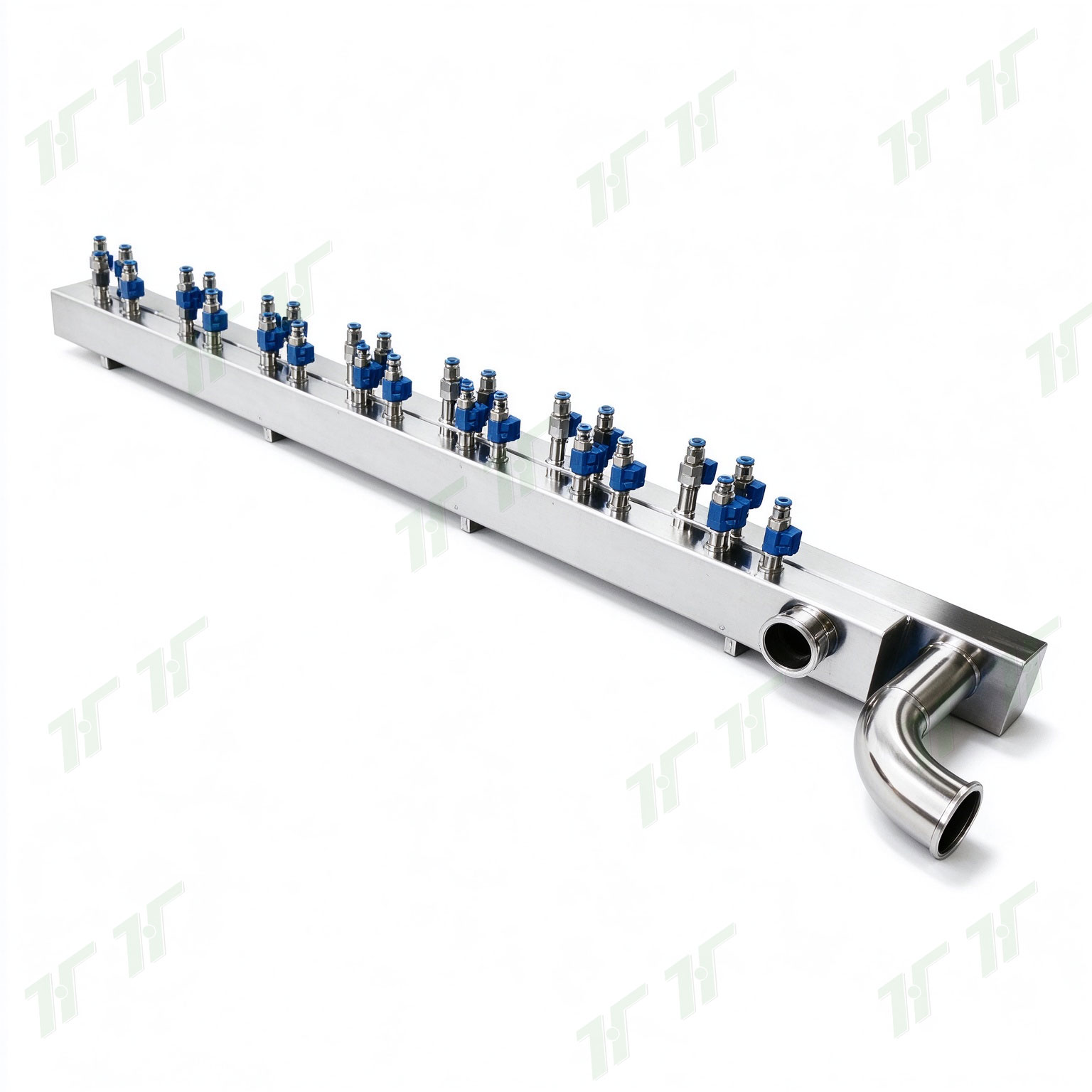
Specifications
| Parameter | Specification |
|---|---|
| Material | Stainless Steel SS316L / Aluminum Alloy 6061 (other grades per drawing requirements) |
| Process | CNC Machining Centers, Mill-Turn Machining, CNC Turning |
| Tolerance | 0~3mm ±0.02; 3~6mm ±0.03; 6~20mm ±0.03; 20~50mm ±0.06; >50mm ±0.07 |
| Surface Treatment | Stainless Steel: Electropolishing + Passivation; Aluminum: Anodizing (clear or dyed) |
| Marking | Laser Engraving (Part No./Logo/Flow Port ID) |
| Packaging | Tray Packaging (Anti-static bag, foam padding, export carton) |
| Compliance | RoHS 2.0, REACH (Materials and processes comply with relevant environmental requirements) |
Applications
Our liquid cooling manifold components support coolant distribution and connection requirements in data center liquid cooling systems.
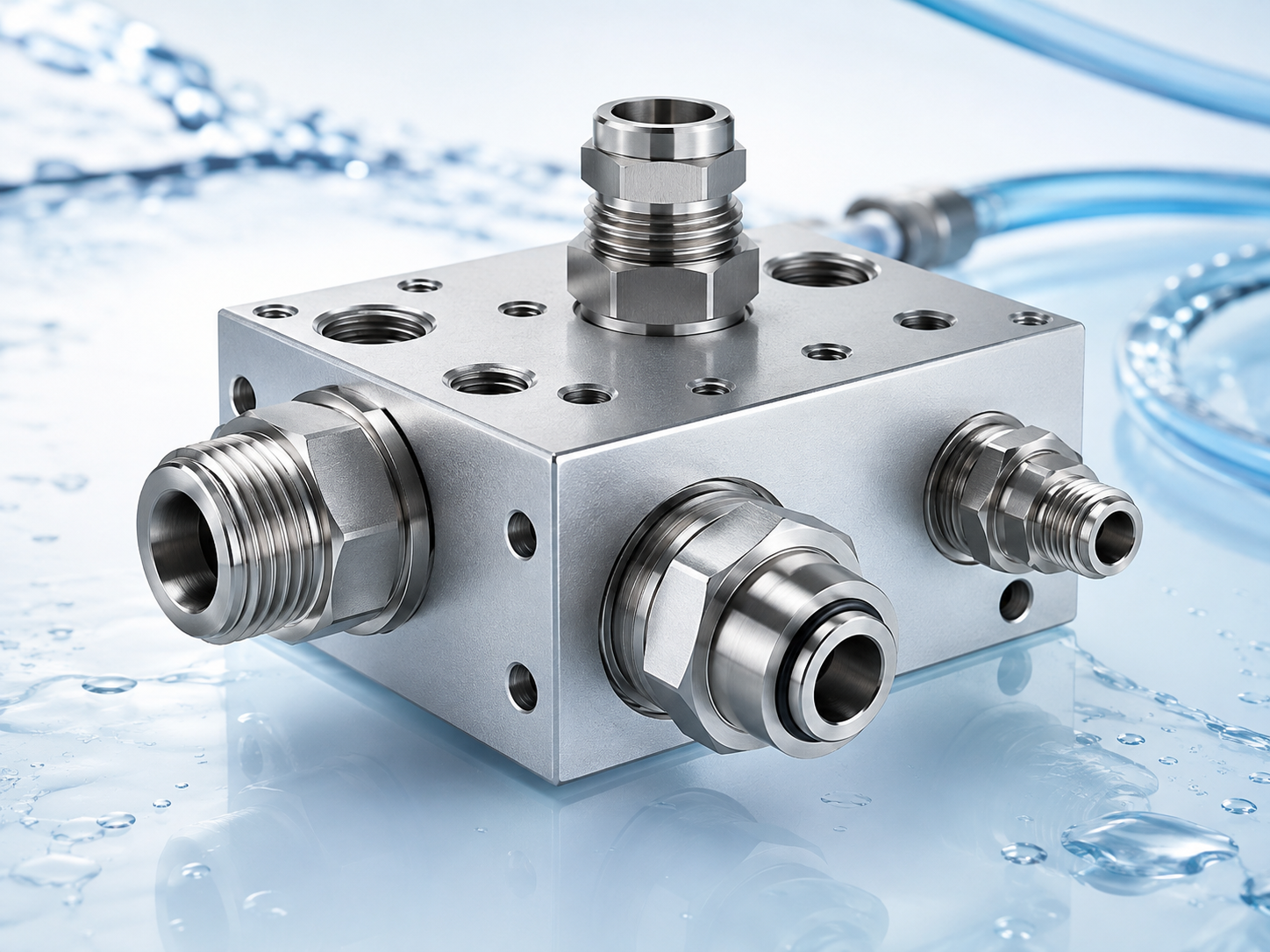
Manifold Body and Adapter Connections
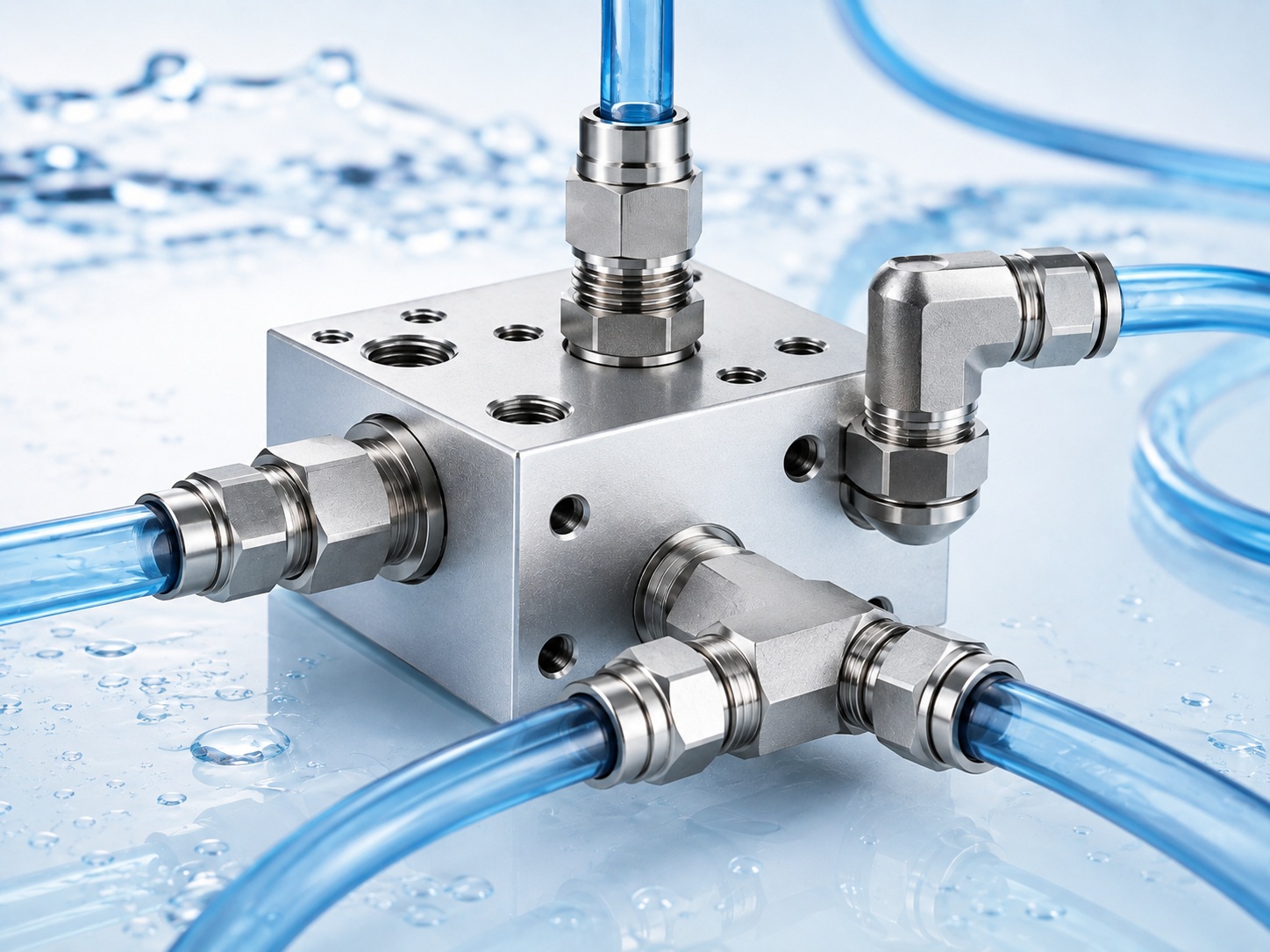
Manifold body ports connect to adapters to accommodate different thread specifications and support efficient coolant distribution in liquid cooling manifolds.
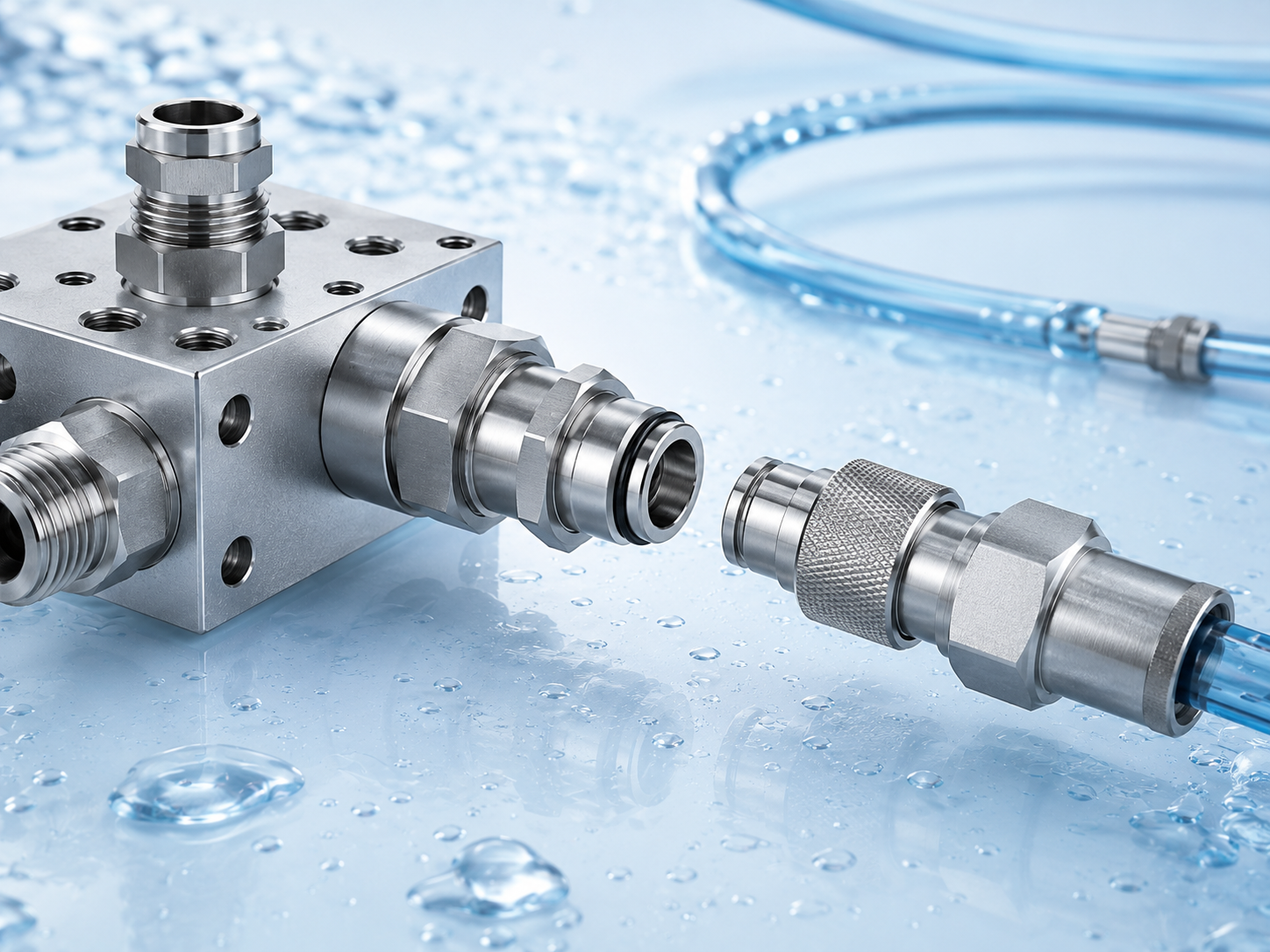
Connection of Fittings to Flow Ports
Fittings (straight/elbow/tee) mounted on manifold body flow ports enable coolant line direction changes and branch connections
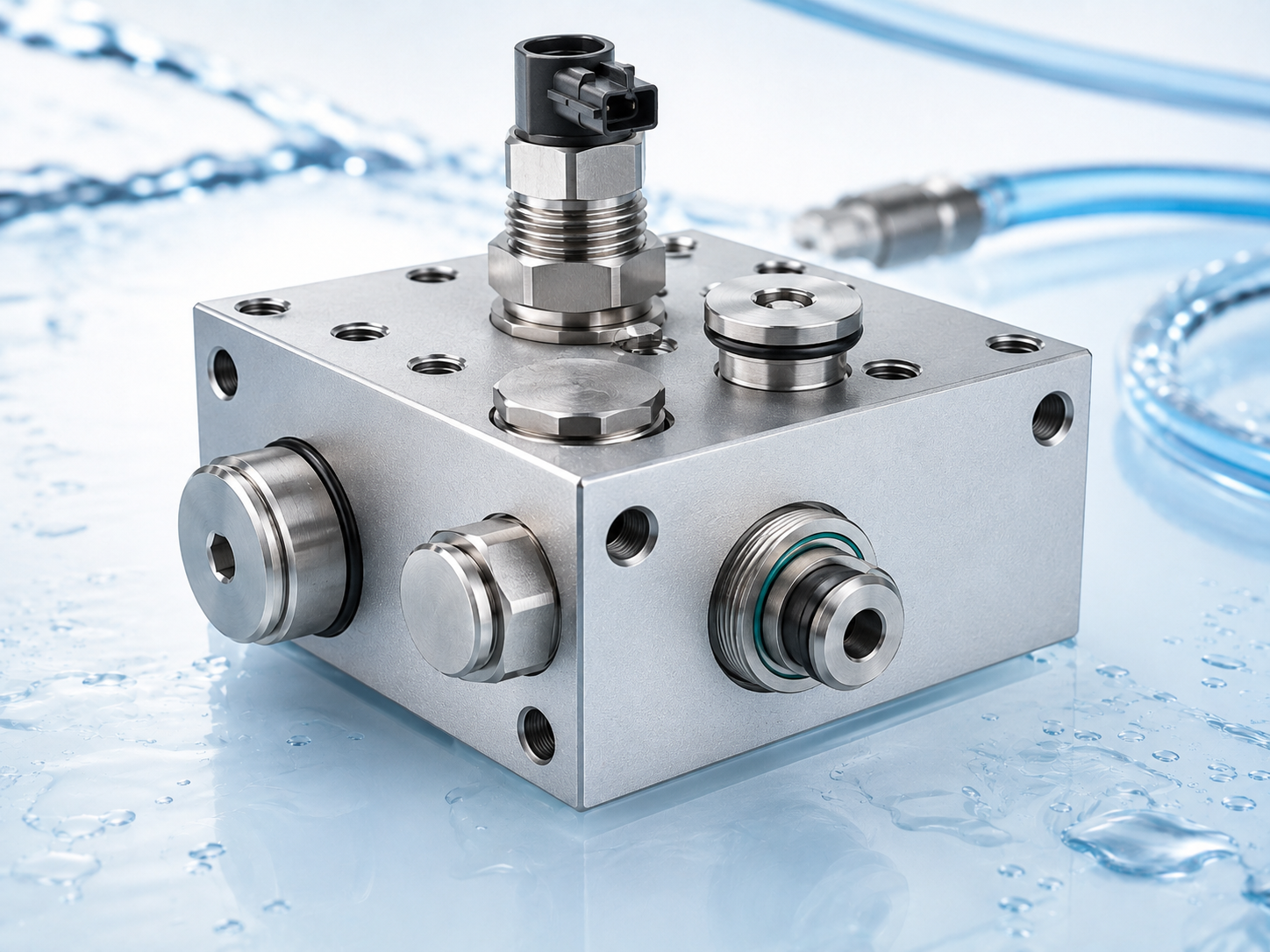
Mounting of Connector Interface for Quick Disconnect Plug/Socket
Connector Interface serves as the mounting bridge between manifold body and quick disconnect plugs/sockets, enabling quick changeover and maintenance
Sealing and Connection of Threaded Parts in Manifold Assemblies
Various Threaded Parts are used for line sealing, end cap closure, and sensor interface mounting in manifold assemblies
Quality Control
Each batch of manifold components undergoes the following quality control procedures:
Incoming Material Inspection
Verification of bar/extrusion material certificates; aluminum temper and stainless steel grade confirmation; bar straightness and O.D. sampling inspection
Dimensional Inspection
Port diameter and position tolerance inspection; thread go/no-go gauge inspection; flow channel diameter and depth measurement; interface sealing surface dimension and flatness inspection
In-Process Control
Real-time in-process monitoring of critical hole positions during CNC multi-axis machining; SPC data recording for flow channel machining dimensions
Batch Traceability
Lot coding, production date, and inspection reports fully archived; port dimension inspection data traceable per batch
Customization
We provide build-to-print machining of liquid cooling manifold parts and custom manifold assemblies according to customer drawings and specifications.
CNC Multi-Axis Machining
Utilizing CNC machining centers and mill-turn equipment for complete processing of Manifold Body multi-hole positions, flow channels, and profiles in reduced setups to ensure positional accuracy
Multi-Port Precision Machining
Specializing in port hole machining on Manifold Body and mounting hole machining for various Fittings and Connector Interfaces, with strict control of hole spacing, diameter, and position tolerances to ensure accurate mating with matching parts
Internal Flow Channel Machining
Covering internal cross-drilled holes, counterbores, flow transition structures, and flow channel surface finish control to ensure uniform coolant distribution and smooth flow
Thread Machining
Supports UNF/BSPP/NPT and other thread specifications on all ports, Adapters, and Threaded Parts, with 100% thread gauge inspection to ensure interface interchangeability
FAQ
Find answers to common questions about our products, services, and support.
How is multi‑port position tolerance ensured on Manifold Body machining?
We utilize CNC machining center multi‑axis simultaneous motion and in‑process probe measurement systems to monitor hole positions in real time. Critical hole position tolerances are controlled within drawing requirements and verified through CMM sampling inspection.
How are burrs removed from internal cross‑drilled holes in manifolds?
Cross‑hole deburring is a critical step in manifold machining. We employ a combination of specialized deburring tools, high‑pressure internal coolant flushing, and chemical deburring processes to ensure no residual burrs remain in flow channels, achieving smooth coolant flow.
What are the machining differences between aluminum and stainless steel manifolds?
Aluminum alloy (e.g., 6061) offers better machinability and higher processing efficiency, but requires attention to stress relief and deformation control. Stainless steel (e.g., SS316L) requires higher cutting forces and causes faster tool wear, necessitating more conservative cutting parameters and more rigid fixturing. We develop processing plans tailored to each material's characteristics.
How is the flatness of manifold port sealing surfaces ensured?
Sealing surfaces are finished by CNC precision milling or turning, with flatness sampled after machining. For aluminum materials, we account for stress‑induced deformation and incorporate semi‑finishing plus finishing operations to ensure final flatness meets drawing requirements.
What is your capacity for manifold component production?
Our monthly capacity exceeds 100,000 pieces. We support prototyping and small‑batch orders for manifold design validation. Lead time and MOQ are determined per drawing and process requirements.