
Blind Raised Face Flange
We manufacture blind raised face flanges for piping systems, pressure vessels and equipment openings, according to customer drawings and applicable GB, ASME, JIS and DIN standards. Our stainless steel blind flanges are available in grades including 316L, 304L, 321/321H, 310S, 317L, 304H, 347H, 904L and Duplex 2205, subject to project requirements. These solid flanges have no center bore and are designed to close pipe ends or equipment openings. Manufacturing options include hot forging and precision machining of the raised face and bolt holes. Sizes range from 3/8" to 32" (DN10–DN800), with pressure ratings selected according to the applicable standard, material, size and design requirements.
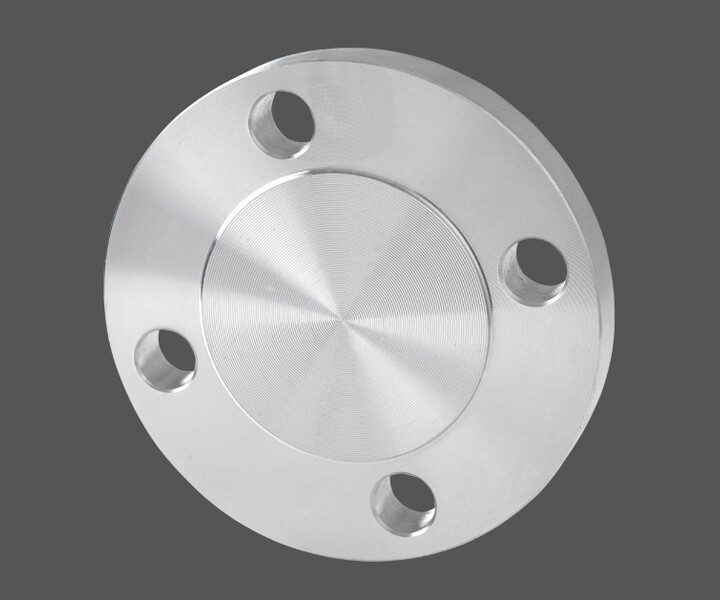
Specifications
| Parameter | Specification |
|---|---|
| Material | 317L, 310S, 304H, 347H, Duplex 2205, 321/321H, 904L/304L, 316L |
| Process | Hot Forging |
| Size Range | 3/8"–32" (DN10–DN800) |
| Standards | GB, ASME, JIS, DIN |
| Pressure Rating | PN1.0MPa, PN1.6MPa, 150LB, 300LB, 10K, 16K |
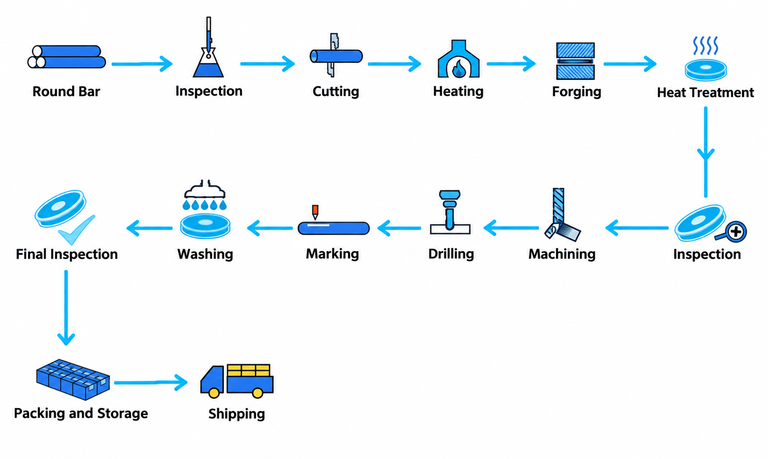
Production Process
Every step is strictly controlled — from raw material to final shipment.
Applications
Our raised face blind flanges are used to close piping ends and compatible equipment openings, providing a removable closure for isolation, inspection and maintenance where required by the system design.
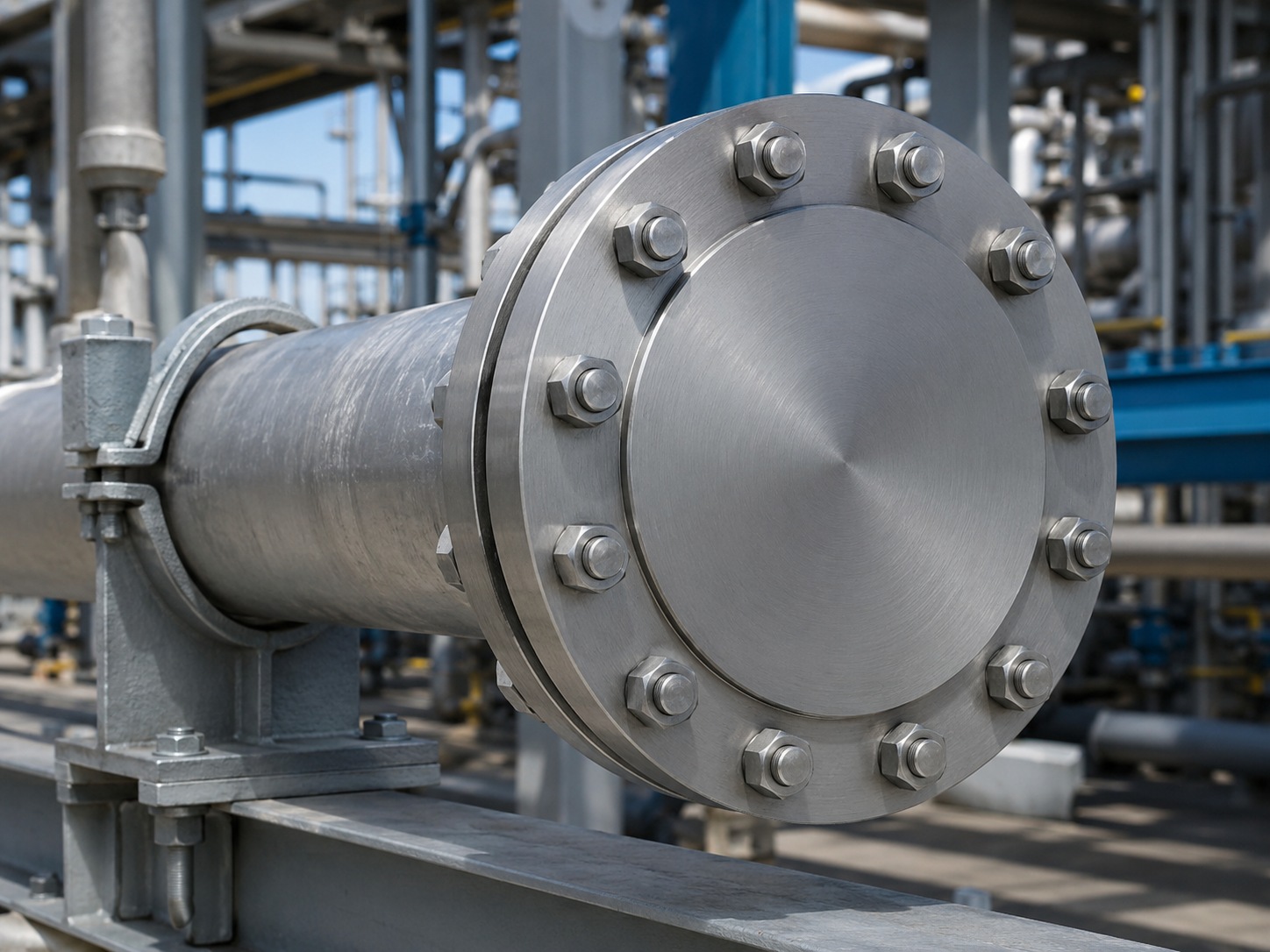
Piping System Termination
Blind raised face flanges close the ends of compatible piping systems. When correctly selected, installed and bolted with a suitable gasket, they help prevent process fluid leakage under specified operating conditions.
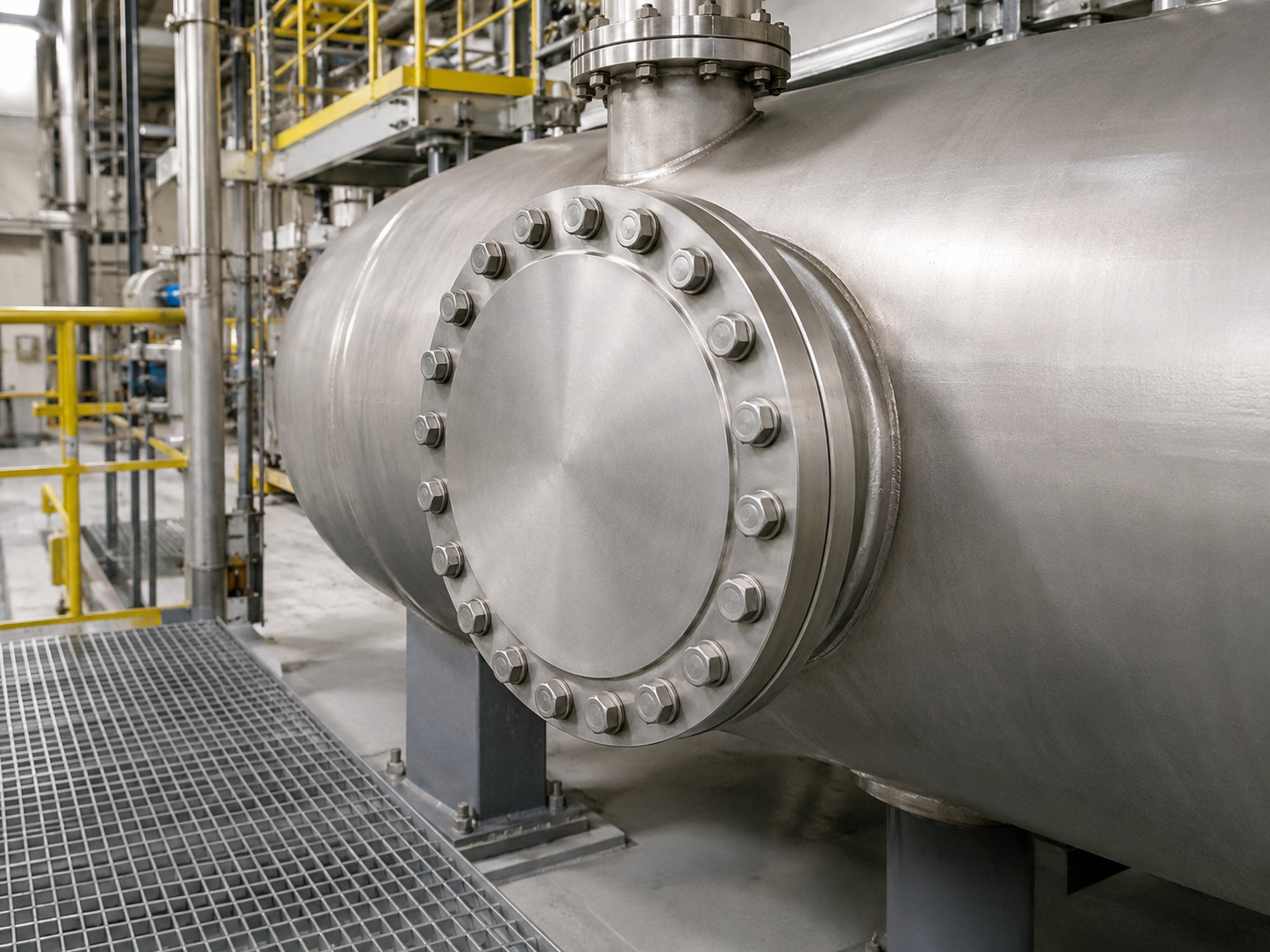
Pressure Vessel and Equipment Openings
Blind flanges serve as closures for pressure vessels, heat exchangers, and tank manways, enabling pressure isolation and access for internal inspection and cleaning.
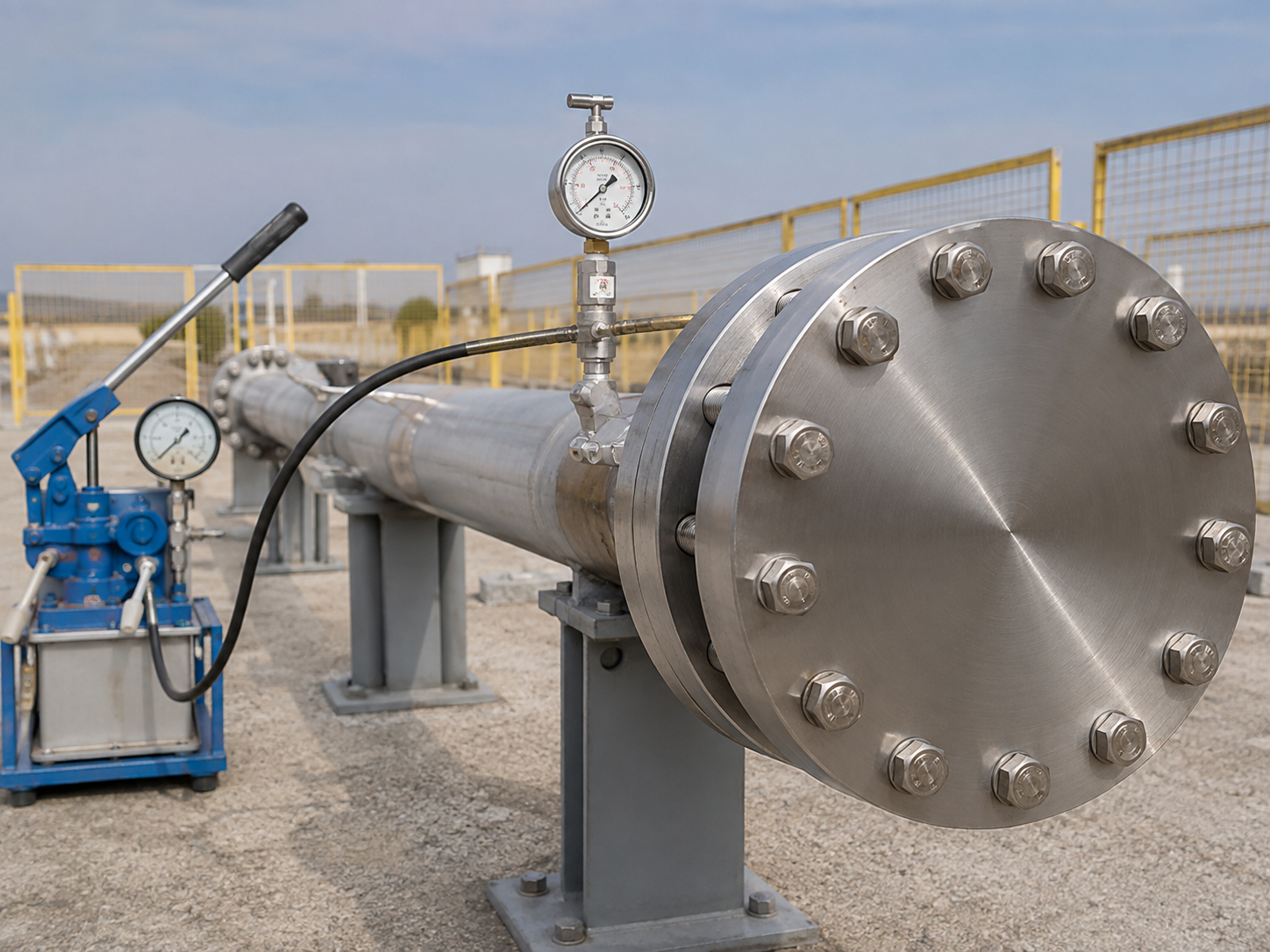
Pipeline Pressure Testing
Blind flanges are widely used to seal pipe ends during hydrostatic or pneumatic pressure testing, allowing test pressure to be applied to verify system integrity.
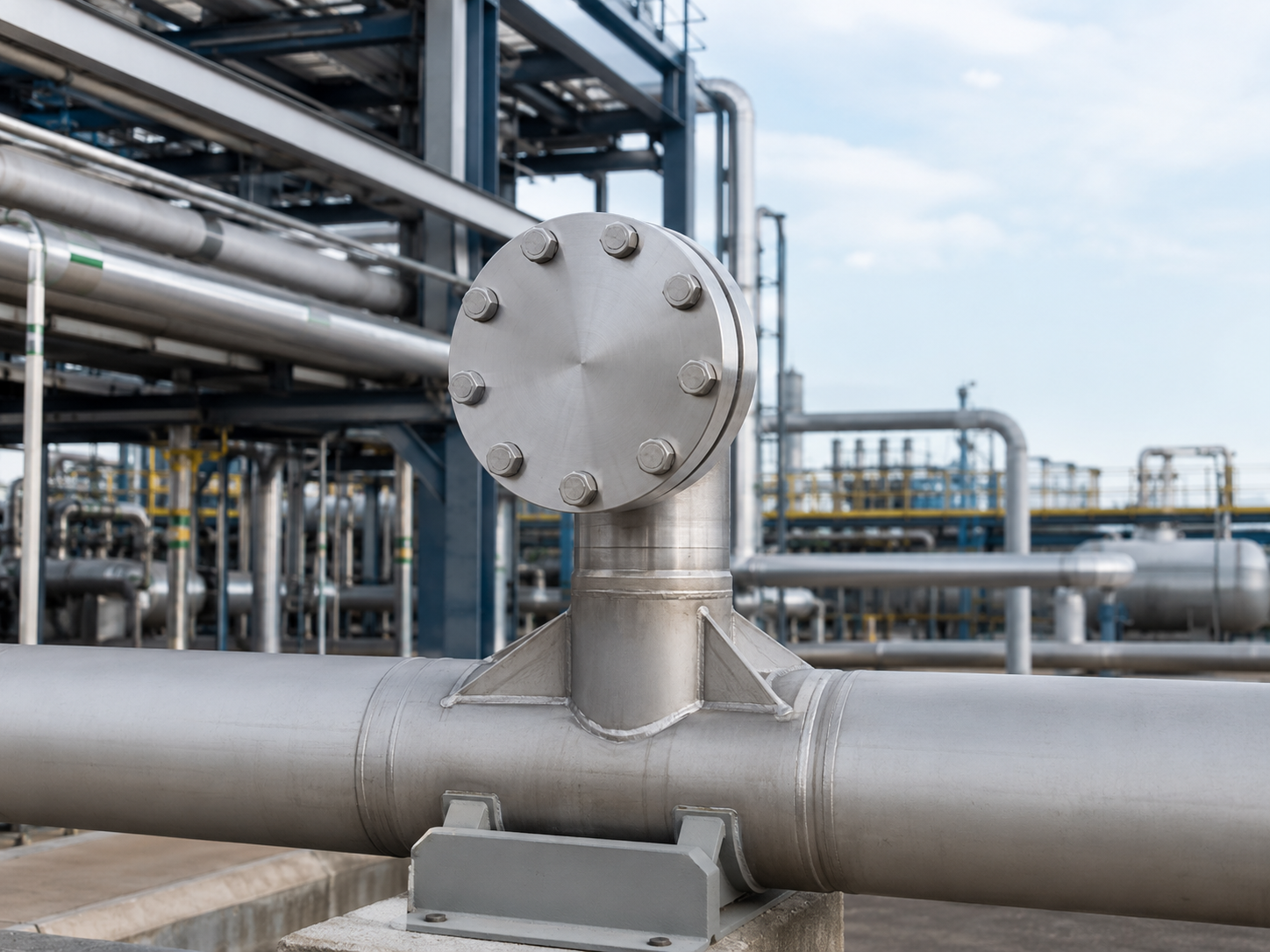
Future Expansion Points
Blind flanges are installed at planned future connection points in piping systems, allowing for easy system expansion without removing existing pipeline sections.
Quality Control
Each batch of Blind Flanges undergoes the following quality control procedures:
Incoming Material Inspection
Verification of material certificates (chemical composition and mechanical properties); confirmation of material grade per order requirements; visual inspection of forging blanks for surface defects.
Dimensional Inspection
Outer diameter and thickness measurement; bolt circle diameter and bolt hole positioning inspection; sealing face flatness inspection; overall flatness inspection of the solid plate.
In-Process Control
Real-time monitoring of forging temperature during hot forming process; dimensional inspection of sealing face after machining; sealing face surface roughness inspection.
Batch Traceability
Heat number, production date, material test reports, and dimensional inspection records fully archived; all inspection data traceable per batch.
Customization
We provide custom stainless steel blind flange manufacturing according to customer drawings and project specifications, including raised face machining, bolt-hole drilling, dimensional inspection and product marking.
Hot Forging Forming
Utilizing advanced hot forging equipment for one-step forming of flange blanks, ensuring dense internal structure, uniform grain distribution, and excellent mechanical properties.
Precision Machining of Sealing Face and Bore
Specializing in precision turning of flange sealing faces (RF type), strictly controlling flatness and surface roughness to ensure reliable sealing performance when bolted to a mating flange.
Bolt Hole Drilling and Positioning
Professional drilling of bolt holes with strict control of bolt circle diameter and hole positioning accuracy, ensuring precise alignment with matching flanges.
Custom Marking
Supports steel stamp marking per customer requirements, including material grade, pressure rating, size, standard, and heat number for full traceability.
FAQ
Find answers to common questions about our products, services, and support.
What standards do you manufacture Blind Flanges to?
We manufacture blind flanges according to applicable GB, ASME, JIS and DIN standards, as well as customer drawings, subject to the required specifications and manufacturing capabilities.
What is the difference between Blind Flanges and other flange types?
Blind flanges have no center bore and are used to close pipe ends or equipment openings. Weld neck, slip-on and other open-bore flange types are generally used to connect piping sections or equipment interfaces.
What pressure ratings are available for your Blind Flanges?
Available pressure ratings may include PN1.0 MPa, PN1.6 MPa, 150 LB, 300 LB, 10K and 16K, subject to the applicable standard, flange size, material and design requirements.
Can Blind Flanges be used for high-pressure applications?
Blind flanges can be designed for high-pressure applications when the selected material, thickness, bolting, gasket and flange rating meet the applicable design requirements. The required specifications should be confirmed for each operating condition.